Ductless vs. Traditional HVAC: How to Choose the Right System for Your Long Island Property
Dec 17, 2025
As ductless mini-split systems continue to grow in popularity across Long Island, more homeowners and businesses are turning to them for energy-efficient heating and cooling. While ductless systems are incredibly versatile and effective in the right environment, they are not the best solution for every space. In fact, choosing the wrong type of system can create serious comfort, moisture, and performance issues.
Recently, Maple Mechanical received a call from a Long Island client who had four ductless units installed in a pool facility. The result?
The building was sweating. The ceiling was dripping with moisture. Guests were uncomfortable. Equipment was at risk.
The issue wasn't the quality of the ductless units — it was that the space was improperly designed, and the customer was given the wrong advice about what type of system was appropriate.
There is a time and place to use ductless systems, and understanding the difference is crucial for avoiding costly mistakes.
Below are clear guidelines to help determine when a ductless system is the right choice — and when a traditional HVAC system is the only safe and effective option.
When a Ductless Mini-Split System Is the Right Choice
Ductless systems shine in specific applications. The ductless technology is available in Multi Position Air Handlers and Slim Duct Air Handlers, both installed in attics or basements with ductwork (as a conventional system). They are ideal when:
1. You're Heating or Cooling Single Rooms or Small Zones
Perfect for:
- Home offices
- Finished basements
- Sunrooms
- Bedrooms or additions
- Garage conversions
Ductless systems allow zoned control, meaning you only heat/cool the areas you use — saving money.
2. Your Home Has No Existing Ductwork
Long Island has many older colonials, capes, ranches, and split-level homes built before central air was common. Installing new ductwork can be expensive and invasive.
A ductless mini-split provides:
- Quick installation
- No major construction
- Quiet operation
- High efficiency
3. You Want Maximum Energy Efficiency
Modern Mitsubishi Electric systems offer:
- Variable-speed compressors
- Hyper-heat technology for cold climates
- Better humidity control
Ductless systems are among the most efficient HVAC options available today.
4. You Need Supplemental Heating or Cooling
Great for:
- Hot upstairs bedrooms
- Rooms that never reach the right temperature
- Home additions that your existing HVAC can't support
5. Small Commercial Spaces
Ductless can work well in:
- Small offices
- Retail shops
- Reception areas
As long as the space has normal humidity loads, ductless is often a perfect fit.
When Not to Use a Ductless System (Important!)
There are scenarios where a ductless mini-split is not appropriate — and may even cause structural or safety issues.
1. High-Humidity Environments (e.g., Pool Facilities, Spas, Locker Rooms)
Ductless systems are not designed for high-moisture applications. They:
- Cannot properly dehumidify large, wet environments
- Will cause condensation on ceilings, walls, and windows
- Can lead to mold, structural damage, and unsafe conditions
Pool rooms require specialized dehumidification AND HVAC systems — never ductless alone.
2. Large, Open Commercial Spaces
Places like:
- Gyms
- Warehouses
- Event spaces
- Multi-purpose rooms
These need properly engineered ducted systems capable of moving large volumes of air, controlling humidity, and maintaining even temperatures.
3. Homes or Buildings With Significant Airflow Needs
If a building needs:
- High static pressure
- Consistent airflow
- Even distribution across many rooms
…ductless simply cannot achieve this on its own.
4. When Humidity Control Is a Priority
Ductless units provide some dehumidification, but not nearly enough for:
- Indoor pools
- Locker rooms
- Restaurants with heavy cooking
- High-occupancy areas
Traditional HVAC systems can integrate:
- Dedicated dehumidifiers
- ERVs/HRVs
- Commercial ventilation
- Advanced control systems
5. When the Building Needs Fresh Air Ventilation
Ductless systems do not bring in outdoor air.
Spaces that require ventilation for safety, code compliance, or air quality must use ducted systems or integrated ventilation systems.
How Maple Mechanical Helps You Choose the Right System
As a Mitsubishi Diamond Contractor serving Long Island, Maple Mechanical provides expert system design, ensuring each space receives the correct HVAC solution — not just the most convenient one.
When we evaluate a space, we look at:
- Size and layout
- Moisture and humidity load
- Occupancy levels
- Intended use
- Building materials
- Existing systems
- Airflow requirements
This engineering-first approach prevents costly mistakes.
Real-World Lesson: The Pool Facility That Was Given the Wrong Advice
The client who contacted Maple Mechanical had four ductless units installed in a pool room. The contractor who installed them didn't consider humidity load — a critical mistake.
Because ductless units don't remove enough moisture for a wet environment:
- Condensation formed on the ceilings
- Water dripped from above
- Surfaces became slippery
- The building's structure was at risk
The space needed a specialized dehumidification system paired with properly sized HVAC equipment — not standard ductless mini-splits.
This mistake cost the client time, comfort, and additional money.
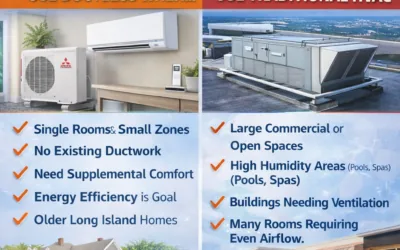
Ductless vs. Traditional HVAC: Quick Guide
| Use Ductless When… | Use Traditional HVAC When… |
Choose the Right System the First Time
When installed in the right environment, ductless systems are incredible. When used incorrectly, they can cause major issues — especially on Long Island, where humidity varies widely throughout the year.
Maple Mechanical ensures your HVAC system is:
- Properly designed
- Sized correctly
- Installed to manufacturer's standards
- Appropriate for your building's needs
- Energy-efficient and reliable
Need help choosing between ductless and traditional HVAC?
Maple Mechanical serves homeowners and businesses across Nassau and Suffolk County, ensuring they receive the right solutions — not sales pressure or bad advice.